
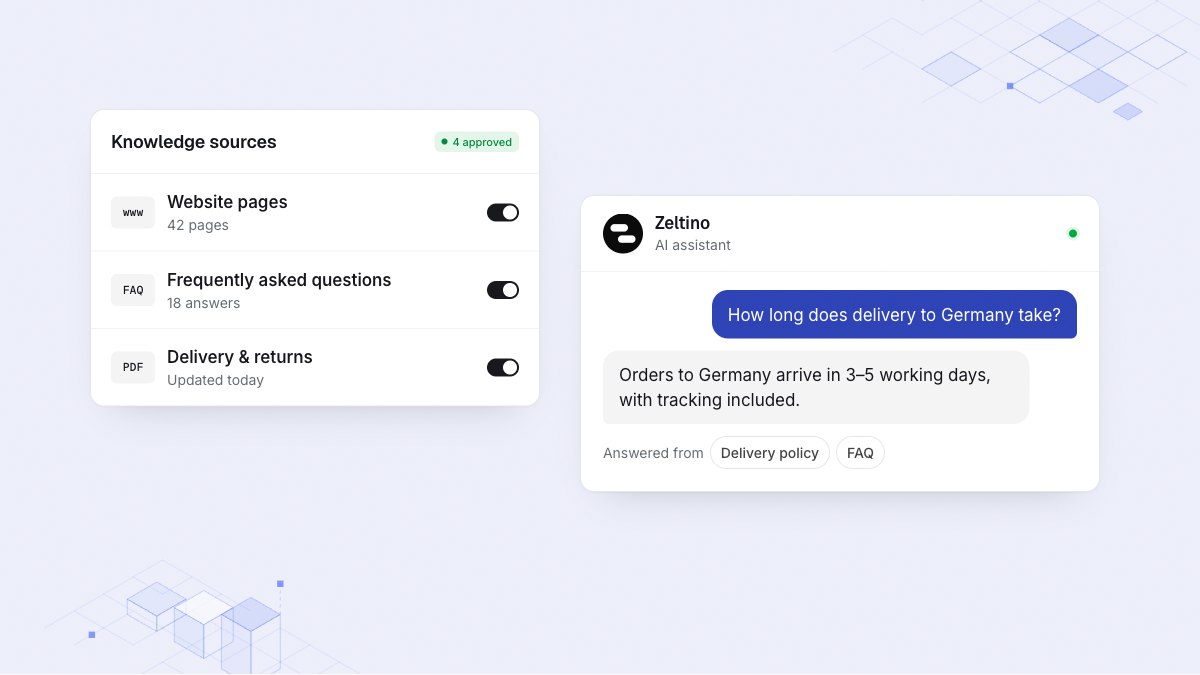
An AI chatbot is a conversational interface that helps website visitors get useful answers without searching through pages, waiting for an email, or fitting their question into a rigid form. Modern systems can also recognize intent, collect context, and recommend what should happen next.
What makes an AI chatbot different from basic live chat?
Live chat usually connects a visitor with a person. A traditional rule-based bot follows a fixed decision tree. An AI chatbot can understand a wider range of questions, use approved business knowledge, and respond even when a visitor phrases something in an unexpected way.
The goal is not to imitate a person. It is to remove the delay between a visitor having a question and receiving a useful answer. When the conversation needs judgement, negotiation, or access to sensitive information, the chatbot should make the handoff clear and preserve the context already collected.
A useful AI chatbot knows both when to answer and when a person should take over.
How does an AI website chatbot work?
The exact setup varies, but the visitor experience usually relies on three connected layers:
- Approved knowledge. The assistant uses selected pages, product information, policies, FAQs, and other sources that the business controls.
- Conversation guidance. It recognizes what the visitor needs, asks focused follow-up questions, and keeps the exchange moving.
- A defined outcome. The conversation can end with an answer, a captured enquiry, a booking, a support handoff, or another measurable next step.
What can an AI chatbot do on a website?
The most valuable jobs are usually the ones that happen repeatedly or lose value when the response arrives too late.
- Answer product, service, pricing, availability, and implementation questions.
- Help visitors compare options and find the page or plan that fits their situation.
- Collect contact details together with the reason for the enquiry.
- Qualify opportunities before they reach a sales or service team.
- Route urgent, sensitive, or high-value conversations for human attention.
- Support customers outside normal working hours without pretending every issue can be automated.
How does it support both lead generation and customer service?
A website conversation often begins before the visitor knows which team they need. Someone asking about an integration may be evaluating the product, troubleshooting an existing setup, or preparing a larger purchase.
An AI chatbot can use follow-up questions to clarify that intent. The same interface can give a direct answer to a routine question, collect the details behind a sales enquiry, or prepare a support handoff with the complete conversation attached.
| Visitor need | Useful chatbot outcome |
|---|---|
| A quick factual question | An immediate answer from approved knowledge |
| Help choosing an option | A recommendation and a relevant next page |
| A complex sales enquiry | Contact details, qualification context, and team alert |
| A sensitive support issue | A clear human handoff with the conversation preserved |
What should you prepare before launching?
Start with one important visitor journey instead of trying to automate every possible conversation. Choose a measurable outcome, confirm the sources the assistant can trust, and decide which situations must reach a person.
It also helps to define the assistant's tone, the details it may request, and the actions it must never take without review. Test real questions from customers rather than only the ideal examples written by the team.
How do you know whether it is working?
Conversation volume alone says very little. A better evaluation connects the chatbot to useful outcomes: questions resolved, enquiries captured with usable context, meetings booked, support requests routed correctly, and repeated friction points discovered in the conversation data.
The first version does not need to cover everything. It needs to make one high-value journey clearer, faster, and easier to measure. From there, the assistant can expand as the business learns what visitors actually ask.
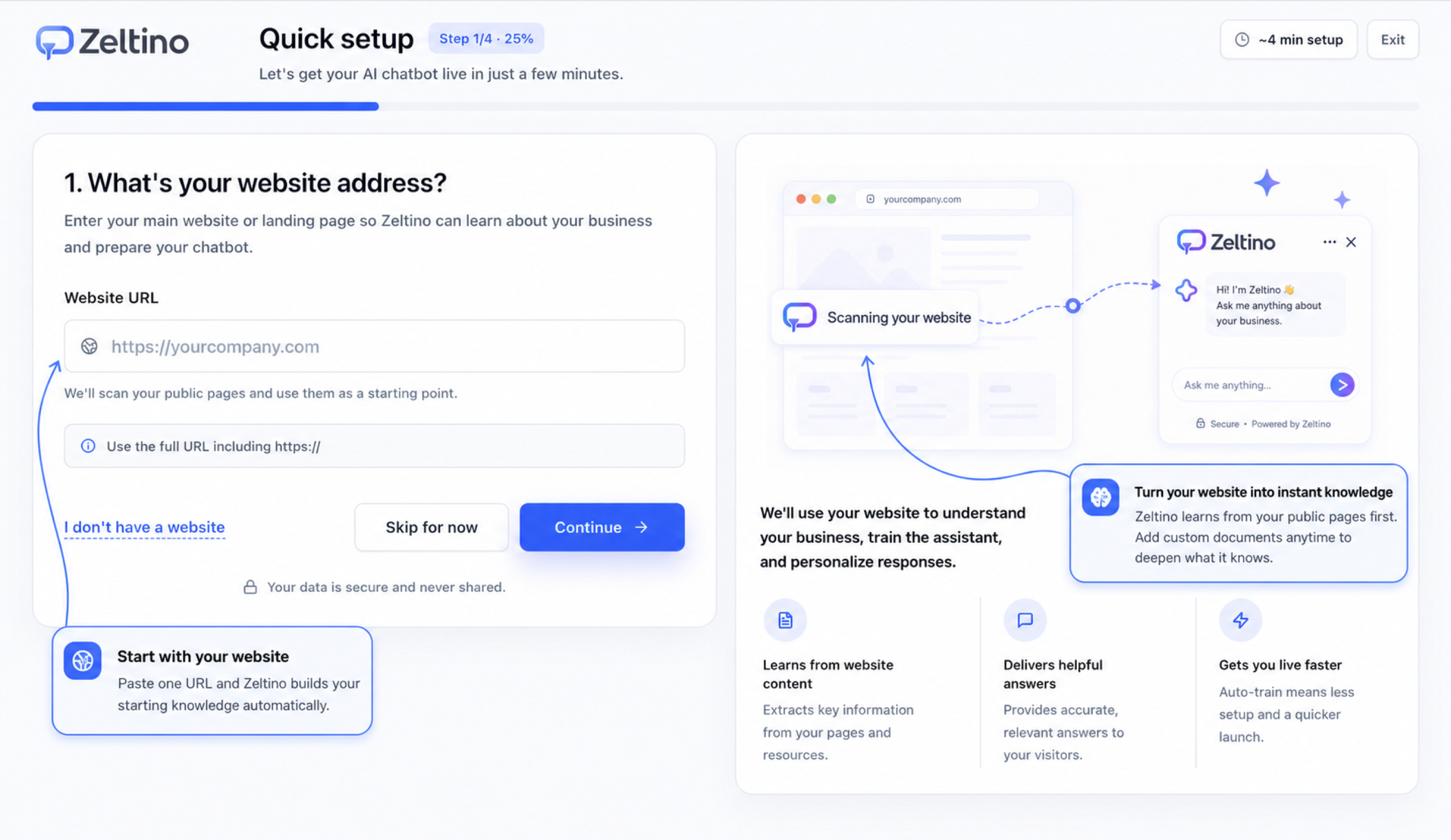
Use the quick setup guide to plan the first Zeltino conversation around a focused business outcome.